
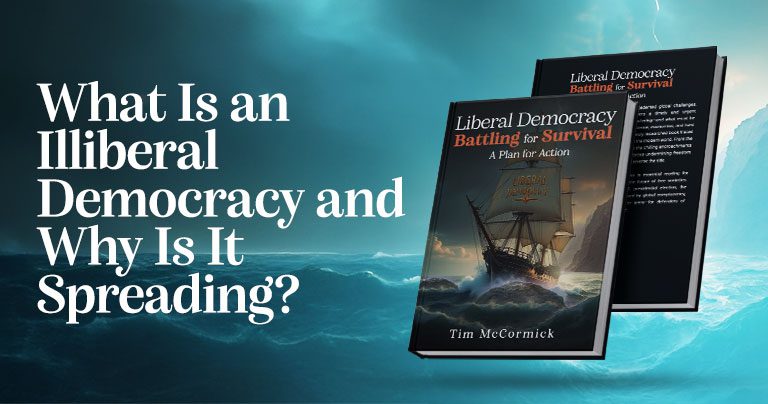
The term illiberal democracy was first proposed by Fareed Rafique Zakaria in 1997. He was an eminent political scientist and famous for his editorial columns in Newsweek. It is a place where he served as a managing editor of foreign affairs for many years.
He introduced this term for the first time in his article and stated that “lliberal democracies were ‘democratically elected regimes often re-elected or reinforced by referendums that ignored the constitutional limits of their power and deprived their citizens of basic rights and liberties.” It is a system where elections take place, but there are inadequate protections of the liberties and rights of people.
Determining the Illiberal Democracy
In this blog, we will give a detailed explanation of illiberal democracy and its core features. We will also share the differences with a full liberal democracy. The meaning of illiberal democracy is a state-owned setup where there is no value of public. The public is completely ignored by all means and is only remembered at the time of general elections. Government give permission to vote, but elects people of their own choice. They control the minds of people very calmly without doing any violence.
The government put strict restrictions on every freedom, activity, or movement that occurs in the country. It badly suppresses the opposition and makes them of no value. Members of the opposition can only tap their desks, but nobody will listen to their voices in the parliamentary assembly session.
Core Features of Illiberal Democracy
The following are the crucial characteristics of an illiberal democracy that holds control everywhere with a growing prevalence:
· Elections Exist But May Be Unfair or Manipulated.
It means that people are allowed to vote, but the process is not truly fair or equal. Elections still happen, ballots are cast, and results are announced, so it looks democratic on the surface. However, the government or ruling party may tilt the system in its favor.
This can happen by controlling the media so voters hear only one side, intimidating or weakening opposition candidates, changing election rules to benefit those in power, misusing state resources during campaigns, or even interfering with vote counting. So, while citizens technically choose their leaders, their choices are influenced or constrained, making it hard for elections to genuinely reflect the will of the people.
· Limited Checks and Balances on Government Power
The government puts limits on the freedom of movement by setting boundaries. It implements certain checks and balances on public gatherings.
In a healthy democracy, power is shared among different institutions such as the legislature, courts, and independent agencies, so that no single leader or group can dominate. When checks and balances are limited, these institutions either lack independence or are weakened, allowing those in power to make decisions without meaningful oversight.
As a result, leaders can pass laws, control state resources, or suppress opposition with little accountability, increasing the risk of abuse of power and undermining democratic governance.
· Restrictions on press freedom and civil society
Governments may control or influence the press by censoring content, shutting down critical media outlets, harassing journalists, or spreading fear through legal threats and arrests. As a result, news reporting becomes biased, incomplete, or self-censored, and citizens receive limited or distorted information.
Similarly, civil society organizations such as NGOs, activist groups, unions, and advocacy networks may face strict regulations, funding restrictions, surveillance, or accusations of being “foreign agents” or enemies of the state. These measures weaken their ability to organize, criticize government policies, or defend citizens’ rights.
Together, restrictions on press freedom and civil society reduce public debate, silence dissent, and limit citizen participation, making it easier for those in power to govern without transparency or accountability.
· Weak protection of minority rights.
In illiberal democracy systems, the government often prioritizes the interests of the majority and treats election victories as a license to rule without restraint. As a result, minority groups may face discrimination, exclusion from political representation, unequal access to justice, or restrictions on their cultural, religious, or political expression.
Because courts, media, and oversight institutions are weak or politicized, minorities have few effective ways to challenge unfair treatment or defend their rights. This can lead to social marginalization, increased tensions, and a political environment where dissenting or non-dominant voices are easily ignored or suppressed.
Causes of the Spread of Illiberal Democracies
Here are some genuine causes of the rise of illiberal democracies in the world:
1. Populism and Democracy
This refers to a political style in which powerful, emotionally appealing leaders claim to directly represent “the people”, often positioning themselves as the only ones capable of fixing national problems.
Charismatic leaders rely on personal appeal, strong speeches, and a cultivated public image rather than strong institutions. They often weaken democratic norms by concentrating authority in their own hands, presenting themselves as decisive and indispensable.
Populism typically divides society into “the pure people” versus “the corrupt elite,” simplifying complex political issues into moral struggles.
2. Leaders Promising “Strong Government” and “National Revival”
This point describes leaders who argue that democracy has made the country weak, divided, or ineffective, and that only a strong central authority can restore order and pride.
They promise:
- Stability instead of debate
- Speed instead of due process
- Unity instead of pluralism
“National revival” is often framed as a return to a glorified past, politically, culturally, or economically. These promises appeal to citizens facing economic hardship, insecurity, or loss of national identity, but often justify expanding executive power and reducing democratic constraints.
3. Use of Nationalism and Anti-Elite Rhetoric
Nationalism is used to define who truly belongs to the nation and who does not. Leaders emphasize loyalty, tradition, culture, or religion to rally support and marginalize critics or minorities.
Anti-elite rhetoric portrays:
- Politicians
- Intellectuals
- Journalists
- Judges
as corrupt, foreign-influenced, or disconnected from “ordinary people.”
By attacking elites and institutions, leaders undermine trust in checks and balances, justify silencing opposition, and legitimize the concentration of powerful key traits of illiberal democratic systems.
4. Erosion of Democratic Institutions
The erosion of democratic institutions refers to the gradual weakening of independent bodies that are meant to limit government power and protect democracy. Instead of abolishing these institutions outright, governments often undermine them slowly, making the process less visible but highly damaging over time.
5. Weakening of the Judiciary
An independent judiciary is essential for upholding the rule of law and protecting citizens’ rights. When it is weakened:
- Judges may be politically appointed based on loyalty rather than competence.
- Courts may face pressure to rule in favor of the government.
- Legal cases against those in power are delayed, dismissed, or never investigated.
As a result, the judiciary loses its ability to act as a neutral arbiter, and citizens, especially opposition figures and minorities, cannot rely on courts for justice.
6. Failure of the Media
A free and independent media serves as a watchdog, exposing corruption and informing the public. Its erosion occurs when:
- Governments take control of public broadcasters or influence private media owners.
- Critical journalists face harassment, censorship, lawsuits, or imprisonment.
- Media outlets practice self-censorship out of fear of retaliation.
This leads to biased reporting, reduced investigative journalism, and a public that lacks access to accurate and diverse information.
7. Fading of Legislative Oversight
Legislative oversight ensures that elected representatives can question, investigate, and limit executive actions. It becomes weak when:
- The ruling party dominates parliament and marginalizes opposition voices.
- Emergency powers or executive decrees bypass legislative approval.
- Parliamentary committees lose authority or independence.
Without effective oversight, laws are passed quickly with little debate, budgets go unscrutinized, and executive power expands unchecked.
Overall Impact
When the judiciary, media, and legislature are weakened simultaneously:
- Power becomes concentrated in the executive.
- Accountability declines.
- Corruption and abuse of authority increase.
- Democracy continues in name, but its institutions no longer function properly.
This slow institutional decay is a defining characteristic of illiberal democracies and often precedes a shift toward authoritarian rule.
8. Globalization and Economic Uncertainty
Globalization and economic uncertainty are key social and economic factors that can make citizens more receptive to illiberal leaders and populist policies. Let’s break it down clearly:
Globalization
Globalization refers to the increasing integration of economies, cultures, and politics across borders through trade, technology, migration, and communication.
While globalization has benefits, it can also create challenges:
- Job insecurity: Industries may move abroad, causing unemployment or wage stagnation in certain sectors.
- Cultural anxiety: People may fear that traditional values, language, or cultural identity are being diluted by foreign influence.
- Perceived loss of control: Citizens may feel that global institutions, trade deals, or multinational corporations dictate national policies, reducing their sovereignty.
In such conditions, leaders who promise to protect national interests, bring jobs back, or prioritize “our people first” gain popular support.
9. Economic Uncertainty
Economic uncertainty occurs when people cannot rely on stable incomes, employment, or social services. Causes include:
- Recessions or slow growth
- Inflation or rising living costs
- Inequality and wealth concentration
- Rapid technological change or automation
When people feel financially insecure, they may:
- Support strong leaders who promise quick solutions.
- Prioritize stability over democratic freedoms.
- Blame elites, foreigners, or minority groups for economic woes.
10. Connection to Illiberal Democracy
Globalization and economic uncertainty create fertile ground for populist and illiberal politics:
- Citizens fear change or instability, making them more willing to accept restrictions on freedoms for “security.”
- Leaders exploit these fears with nationalist, anti-elite, or anti-foreign rhetoric.
- Democratic institutions are gradually weakened as voters trade civil liberties for promises of economic protection and national revival.
11. Technology and Social Media
Technology, especially social media, has dramatically changed how people access information, form opinions, and engage politically. While it can empower citizens, it also has serious risks that can undermine democracy.
12. Disinformation
Disinformation refers to false or misleading information spread deliberately to influence public opinion or obscure the truth.
- Social media allows the rapid spread of rumors, fake news, and manipulated content.
- Political actors can use disinformation to attack opponents, exaggerate threats, or shape narratives.
- Citizens may struggle to distinguish reliable sources from false ones, making informed decision-making harder.
Example: Fake stories about elections, immigrants, or minority groups can sway voter behavior or create fear and mistrust.
13. Polarization
Polarization happens when society divides into opposing groups with little common ground.
- Social media algorithms often show users content that aligns with their existing beliefs, reinforcing “us vs. them” thinking.
- Political debate becomes more extreme, and compromise is seen as weakness.
- Populist leaders exploit polarization by presenting themselves as the only defenders of “the people” against enemies.
This erodes national unity and weakens democratic dialogue.
14. Echo Chambers
An echo chamber is a situation where people are exposed only to opinions and information that reinforce their existing views.
- Social media platforms use algorithms that show content similar to what users engage with.
- Users rarely see alternative perspectives, creating confirmation bias.
- Echo chambers amplify fear, anger, and mistrust toward minorities, elites, or opposition parties.
Effectively, echo chambers make societies less informed, more radicalized, and easier for illiberal leaders to manipulate.
Overall Impact
Technology and social media can accelerate the erosion of democratic norms:
- Disinformation undermines trust in elections and institutions.
- Polarization reduces consensus and fuels conflict.
- Echo chambers amplify radical ideas and weaken critical thinking.
Combined, these effects make it easier for illiberal leaders to maintain power, manipulate public opinion, and justify restrictions on freedoms.
Illiberal Democracy Examples
There are numerous examples of illiberal democracy in the world. Many countries are now following this system. It is because they have no other choice or option except to switch to this. They have seen the brutal decline of a democratic setup due to its own limitations. Here are a few leading examples of illiberal democracy:
- Hungary under Viktor Orbán.
- Turkey under Recep Tayyip Erdoğan.
- Poland under the Law and Justice Party (PiS).
- India debates: democratic structures vs. civil liberties concerns.
- Brief comparison with fully liberal democracies for contrast.
Plan for Action: How Democracy Can Be Saved
The following are some tactics for restoring the democratic system in the world:
- Overcoming Complacency: Citizens must actively engage in democratic preservation.
- Promoting Democratic Benefits: Educate the electorate on freedoms and the advantages of liberal democracy.
- Strengthening Institutions:
-
- Protect judicial independence.
- Ensure media freedom and accountability.
- Enhance transparency in transnational institutions (EU, UN).
- Focusing on Long-Term Goals: Prioritize social equality and sustainability over short-term political gains.
- Call to Engagement: How individuals and societies can implement these strategies in practice.
Conclusion
Liberal democracy, which combines free and fair elections with strong protections for civil liberties, minority rights, and the rule of law, is facing significant global challenges. Its decline is evident in several ways.
The rise of illiberal democracies shows that some countries still hold elections but restrict freedoms, suppress opposition, and weaken institutions. Populism and charismatic leaders exploit public fears and economic uncertainty, promising “strong government” and “national revival” while consolidating power.
Institutions like courts, media, and legislatures are also being weakened, reducing the checks and balances essential to democracy. Additionally, social and technological changes, such as globalization, economic instability, and social media, fuel polarization, disinformation, and distrust in democratic processes.
McCormick suggests several solutions to strengthen democracy. These include reinforcing institutions to ensure judicial independence, legislative oversight, and media freedom, as well as protecting civil liberties and minority rights through legal frameworks and active enforcement.
Promoting an informed citizenry through education, media literacy, and transparency can help people resist manipulation. Encouraging civic participation beyond voting, through community work and activism, is also vital. Finally, global cooperation among democracies can support one another and hold authoritarian regimes accountable, upholding democratic norms worldwide.
Democracy Requires Continuous Effort
Democracy is not self-sustaining. Unlike an automatic machine, it needs ongoing maintenance, including:
- Citizen awareness and education
- Strong institutions that act independently of political pressures
- Global collaboration to uphold norms, human rights, and the rule of law
If neglected, democracy can erode silently, leaving behind forms of governance that appear democratic but lack freedom and justice.
Takeaway: Democracy is a shared responsibility; it survives only if individuals, institutions, and nations actively protect and nurture it.
Frequently Asked Questions
Populist leaders often centralize power and undermine democratic institutions. While they may claim to represent “the people,” they can weaken checks and balances, reduce judicial independence, and restrict press freedom, threatening long-term democratic stability.
Democratic backsliding leaves a bad impact on society as a whole. It weakens the judiciary's power and weakens the economy. The role of civil society becomes null and void due to restrictions on the movement.
Factors include political populism, economic instability, societal polarization, weakening of international norms, and the appeal of centralized power promising stability or nationalistic agendas.
Key indicators include restricted press freedom, judicial interference, and concentration of power, curbs on civil society, and election manipulation or unfair practices.
In liberal democracies, free elections are accompanied by strong protections for human rights, freedom of the press, and an independent judiciary. Illiberal democracies hold elections but often undermine these democratic safeguards.